How to create a loyalty program: 5 key steps | 5BONSAI
Discover 5 key steps, 2026 trends, and the most common mistakes in customer retention.

Why do customers abandon loyalty programs?
Companies often make the same mistake: they create loyalty programs that seem attractive at first glance but, in reality, offer little that encourages customers to stay engaged over the long term. Customers spend money expecting a reward, only to discover after months of waiting that it offers little real value. As a result, they often forget about their account after making a purchase, and their engagement gradually declines.
A loyalty program can be one of the most effective customer retention tools, but only when it is designed well. According to Bain & Company, increasing customer retention by just 5% can boost company profits by 25-95%. That is why, if you want customers to keep coming back, you need to offer them more than just points or discounts.
Here’s what we’ve prepared for you:
- What is a modern loyalty program?
- How to create a loyalty program: 5 key steps
- Loyalty program onboarding - how to increase customer engagement
- The most common loyalty program mistakes - why do customers leave?
- What are the latest trends in loyalty programs?
- A loyalty program that supports the future of your brand
- What is a modern loyalty program?
Today, customers expect value that goes far beyond standard rewards. They want convenient experiences, tailored to their needs, and that clearly improve their everyday interactions with a brand.
One of the key elements of modern loyalty programs is intelligent personalization. Companies use data on customer behavior, preferences, and purchase history to offer benefits and promotions that are genuinely relevant. This is no longer just about segmenting customers based on basket size. It is about giving each customer what they are actually looking for, at the right moment.
Take Netflix, for example. The platform understands what types of films and TV series a user enjoys and then provides personalized recommendations rather than random suggestions. As a result, users feel that Netflix understands their preferences while also saving them time when searching for something new to watch.
Modern loyalty programs are also about convenience at every stage of the customer journey. Users expect everything to work automatically and seamlessly. That is why loyalty programs need to integrate with mobile apps, send push notifications, and deliver automated offers that reflect customers’ current needs.
This allows customers to benefit from the program without having to think about the details, while companies gain greater efficiency and better relationship management, ultimately leading to higher customer satisfaction.
It is also worth noting that modern loyalty programs can have a significant impact on business performance. Retaining loyal customers is considerably more cost-effective than acquiring new ones, and even a small improvement in retention can translate into higher profits.
This shows just how effective a well-designed loyalty program can be - not only in attracting new customers, but also in keeping them engaged over the long term. As a result, companies can benefit from long-term value that supports sustainable growth and greater market stability.
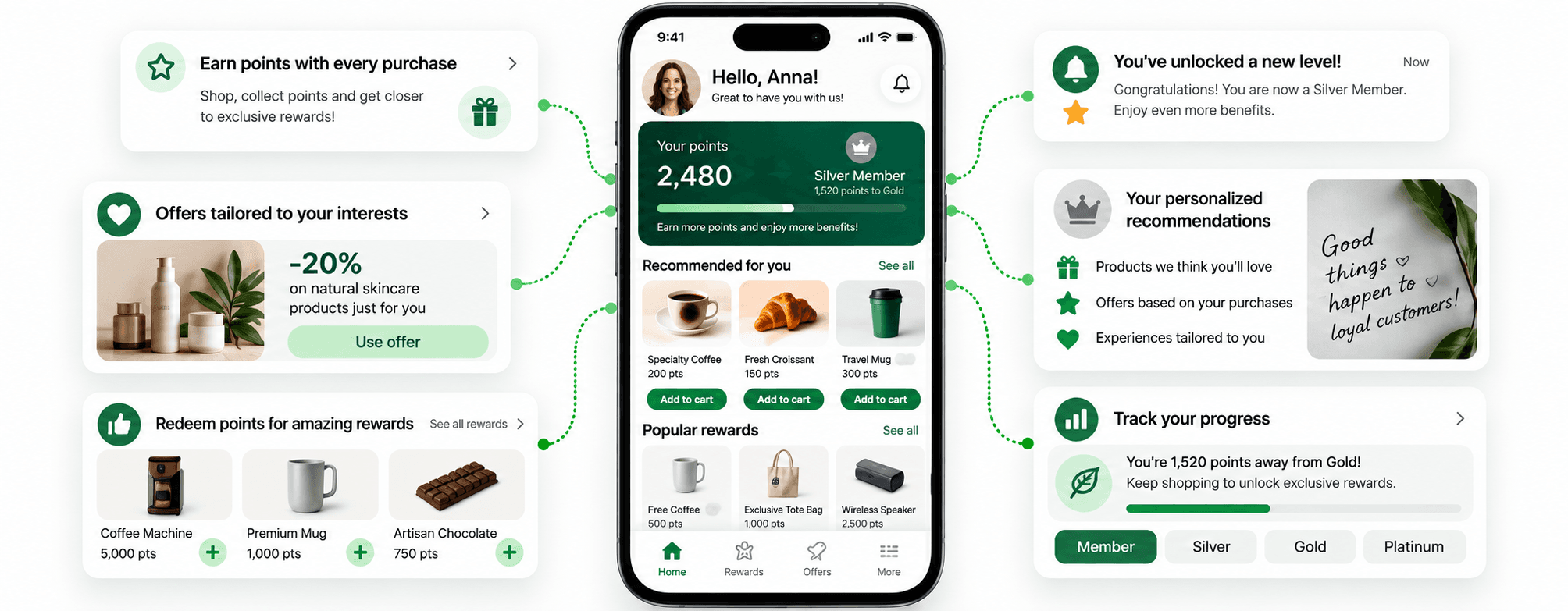
How to create a loyalty program? 5 key steps
A valuable loyalty program does not happen by accident. It is the result of carefully planning each stage and combining your business strategy with the customer experience.
Define your goals and understand your customers
Clear business goals provide direction for the entire project. Do you want to increase purchase frequency? Raise the average order value? Reduce churn? Each objective requires a different program structure and mechanics.
At the same time, understanding the needs, motivations, and expectations of your target audience will help you design a program that delivers real value. Create a short survey, conduct customer interviews, or analyze existing data. This will allow you to build a program that responds to your customers’ actual needs.
Plan the program structure and mechanics
Choose a model that best fits the nature of your business:
- Points-based system - a classic, proven model that is easy for customers to understand
- Tiered program - encourages customers to spend more to reach higher membership levels
- Cashback - a transparent benefit that customers can experience immediately
- VIP access/subscription - creates a sense of exclusivity and belonging
- Hybrid model - combines several of the above approaches and can be adapted to different customer segments
The key is to keep the rules simple and easy to understand while still encouraging customers to engage with the program. Finding the right balance between the effort required from customers and the value of the rewards increases the chances of success.
Design a reward offering that matters
Rewards are an essential part of any loyalty program, and they should be something customers genuinely want to earn. These can include discounts, exclusive offers, early access to products, special experiences, or premium benefits. The goal is not simply to offer something “cheap,” but to provide something customers perceive as genuinely valuable.
Make participation and the user experience simple
If joining or using the program is complicated, many customers will give up before they have a chance to experience its benefits. Make sure you provide:
- Registration in under 60 seconds - ideally using an email address or social media account
- A clear customer dashboard showing points balances and available rewards
- Integration with mobile apps and digital wallets such as Apple Wallet and Google Wallet
- Automated notifications about points that are about to expire or rewards that have become available
Monitor performance and optimize your approach
Remember that a loyalty program does not end on the day it launches. It is an ongoing process that requires continuous attention and monitoring of key metrics, including:
- Active member rate - how many registered members actually use the program
- Purchase frequency before and after joining the program
- CLV (Customer Lifetime Value) - do loyal customers generate higher revenue?
- Reward redemption rate - a rate that is too low may indicate that rewards are unattractive or too difficult to access
By using the tools offered by artificial intelligence in marketing, you can not only analyze past customer behavior but also predict future purchasing decisions.
Loyalty program onboarding - how to increase customer engagement?
If you fail to demonstrate within the first 30 days that your loyalty program provides genuine value, customers may quickly forget about it. Onboarding - the process of introducing customers to the program - is a critical stage that can determine their long-term engagement.
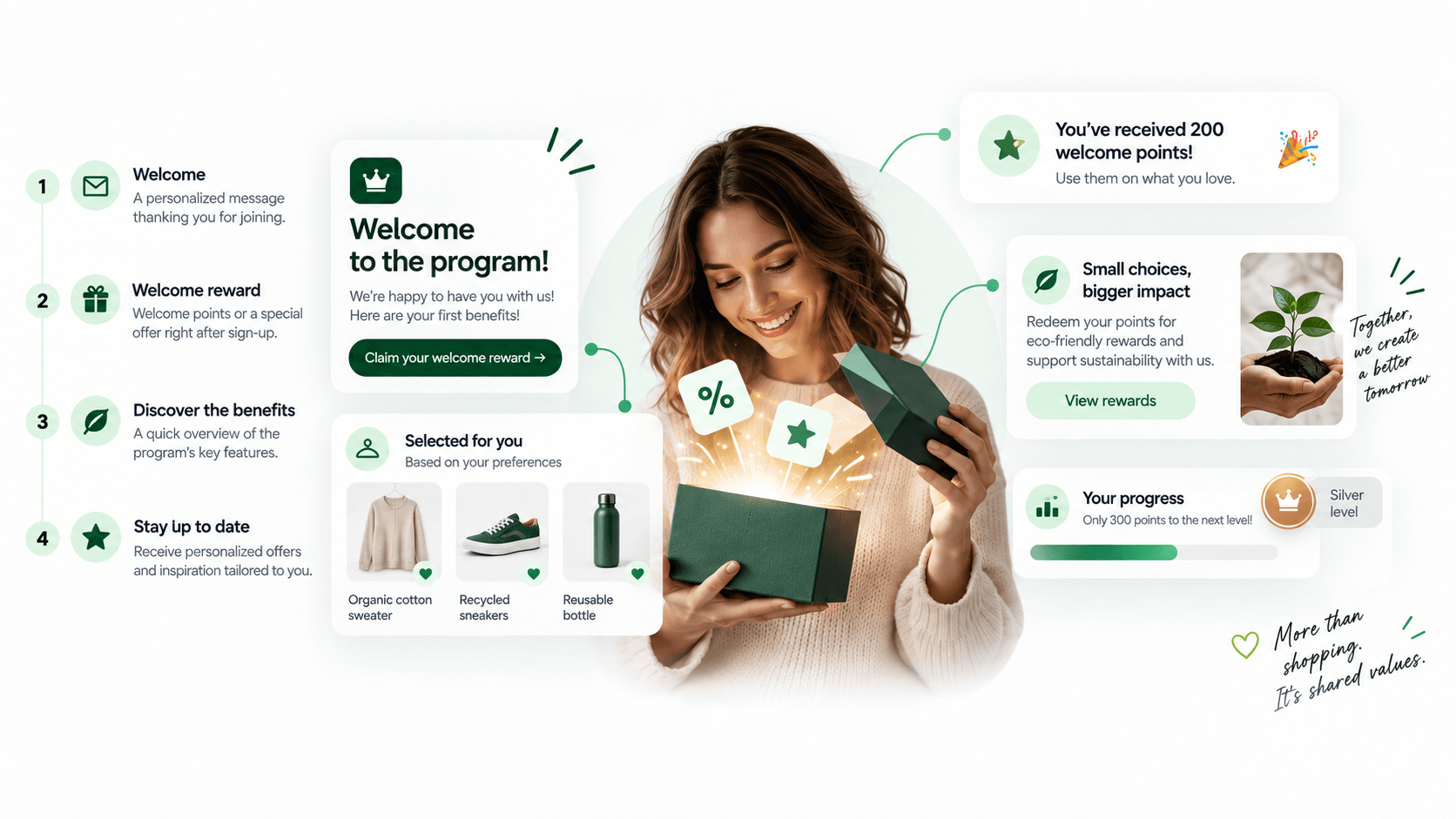
A good place to start is with a personalized welcome message. For example, you could send an email saying: “Hi! Welcome to our loyalty program. Here’s what you can get right away.” This is your opportunity to show customers that their decision to join matters. First impressions are crucial: discounts, welcome points, or a special offer available immediately can encourage engagement from the very beginning. Customers should know that there is something valuable waiting for them as soon as they join.
The emotional side of onboarding is equally important. When customers feel that their needs are understood and that the program has genuinely been designed around their expectations, they begin to develop a stronger connection with your brand. Remember that onboarding is about building a relationship. Customers do not simply want “rewards” – they want an experience that makes them feel understood by the brand.
Imagine a sustainable fashion brand that knows its customers care about environmental issues. During onboarding, it could allow customers to redeem points for rewards connected with sustainability initiatives, such as discounts on products made from recycled materials, opportunities to return old clothing, or access to events focused on sustainable living.
Explore our case studies to see how we turn strategy, automation, and modern marketing into measurable growth and long-term customer engagement.
The most common loyalty program mistakes - why do customers leave?
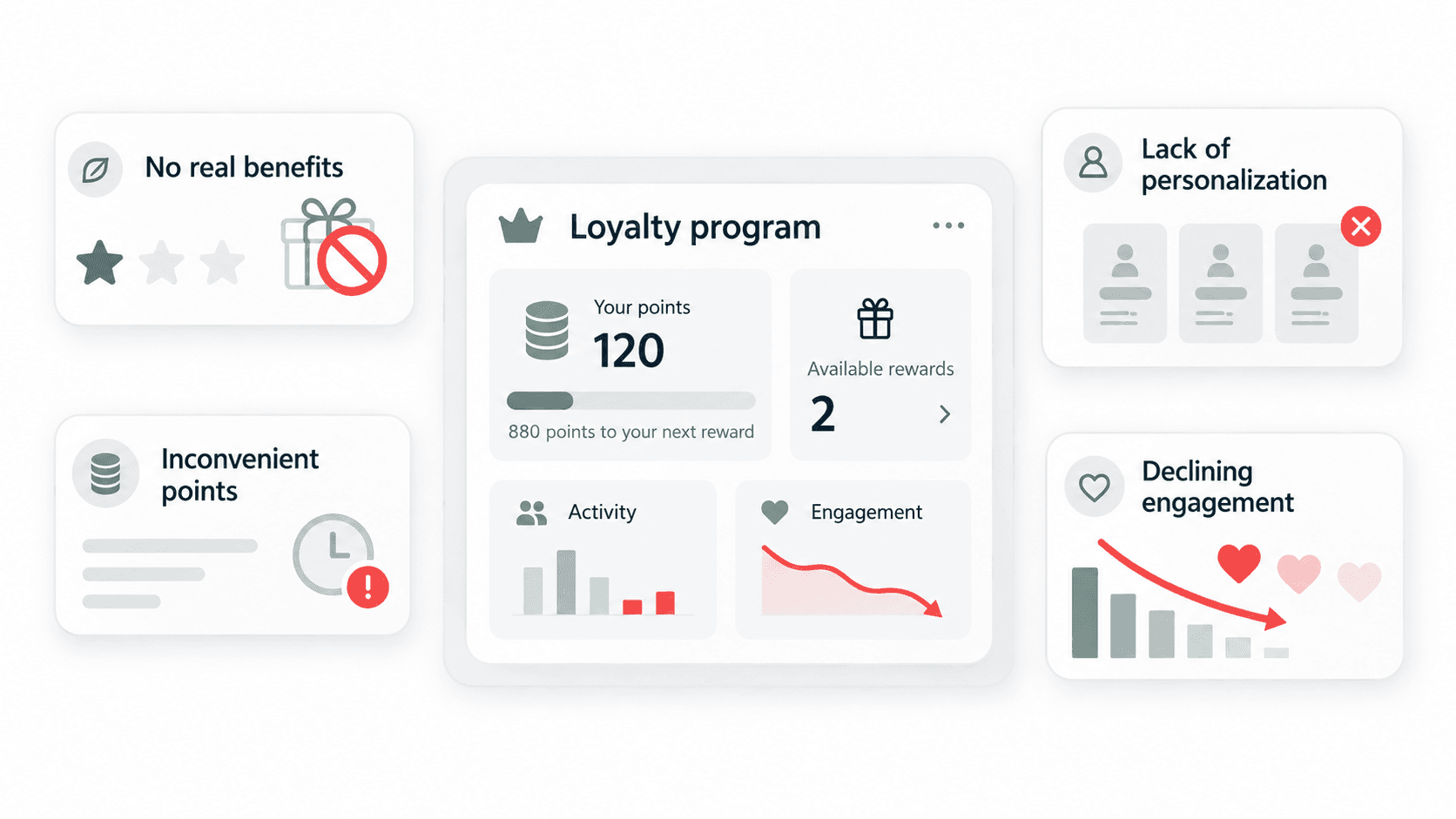
Consumers are more demanding than ever, which means that if a loyalty program becomes frustrating or requires too much effort, they simply stop using it. Here are the most common mistakes that cause customers to abandon their accounts and switch to competitors:
Overly complicated program rules
Customers do not want to waste time trying to understand complex rules. A loyalty program should be simple and intuitive. If the rules are difficult to understand, customers will quickly lose interest and forget about the program.
No real benefits
Rewards that are too small, too difficult to earn, or simply do not meet customer expectations can quickly discourage participation. A loyalty program should offer meaningful benefits such as discounts, exclusive products, or VIP offers.
Lack of personalization
A program that offers the same rewards to every customer fails to make use of individual preferences. To strengthen loyalty, focus on personalization by offering rewards and promotions tailored to each customer’s needs and expectations.
Inconvenient point collection
If a loyalty program is difficult to use, customers will lose motivation. Earning points should be easy, convenient, and aligned with customers’ everyday habits so that participating in the program does not require extra effort.
Lack of long-term engagement
Customers expect loyalty programs to continuously provide new and attractive offers. The real challenge is maintaining engagement after 6 or 12 months. Introduce seasonal promotions, challenges, new membership tiers, and surprise rewards – anything that keeps the program fresh and engaging.
What are the current trends in loyalty programs?
Modern loyalty programs are evolving to keep pace with changing customer expectations. Here are the key trends currently shaping the market:
Gamification
Programs such as Starbucks Rewards incorporate game-like elements that encourage customers to make purchases more frequently through points, challenges, and rewards, making loyalty more engaging.
Sustainability
A growing number of customers, especially Millennials and Gen Z, expect brands to share their values. Loyalty programs connected to eco-friendly initiatives - such as tree planting, carbon offsetting, or recycled products - create a deeper emotional connection than standard discounts.
Integration with Apple Wallet and Google Wallet
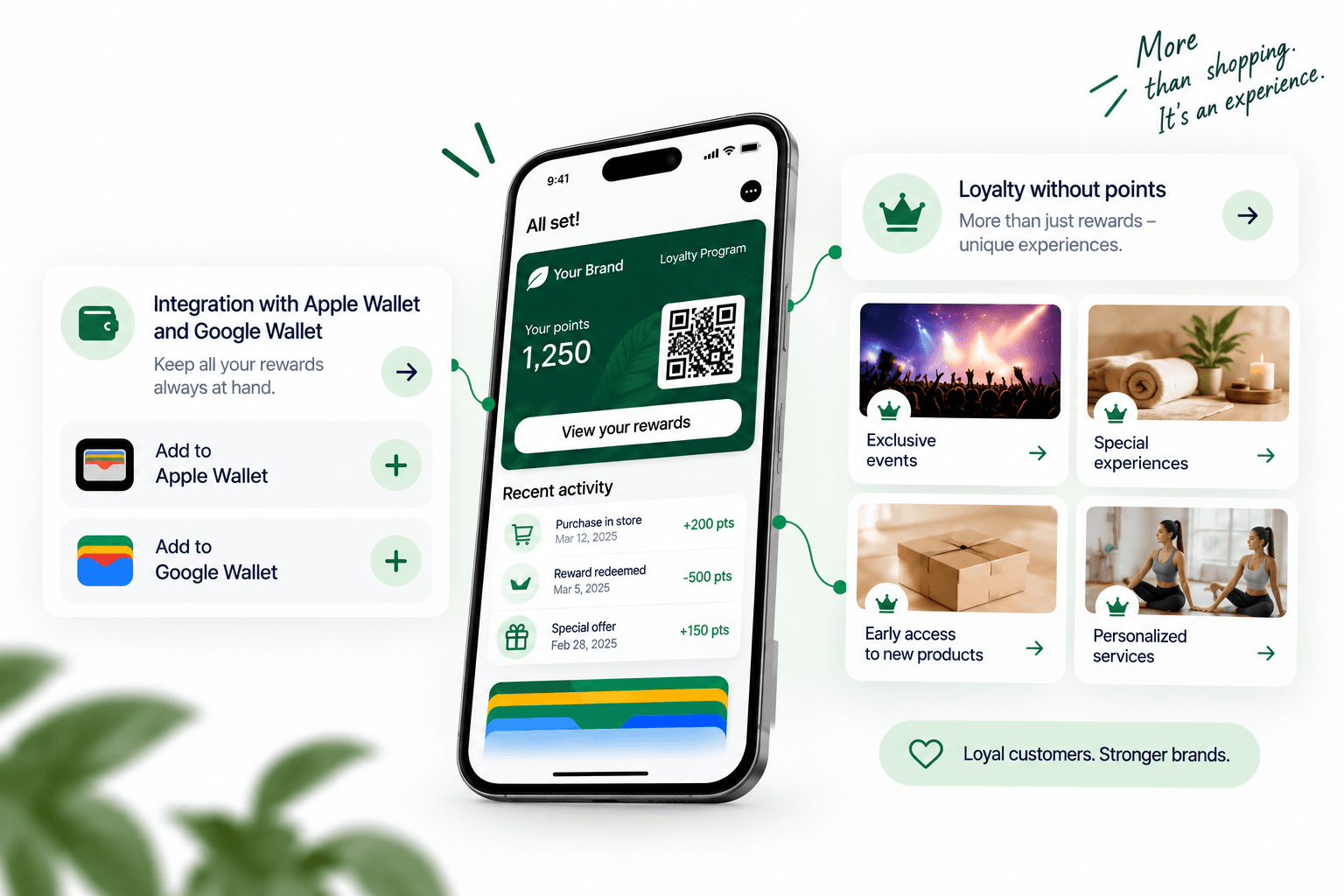
Integration with digital wallets is becoming the norm, allowing customers to manage rewards and points conveniently without having to remember physical loyalty cards.
Loyalty without points
Some brands are moving away from points-based systems in favor of premium subscriptions (such as Amazon Prime) or exclusive experiences, for example beauty workshops, private fashion shows, or personalized fitness sessions with professional trainers.
Zero-party data
In an era of disappearing cookies, companies are increasingly relying on data that customers consciously choose to share. Combined with an omnichannel strategy, AI makes it possible to deliver hyper-personalized offers that genuinely increase profits and strengthen trust in the brand.
A loyalty program that builds the future of your brand
Engaged customers in well-designed loyalty programs spend an average of 30% more, which not only improves financial performance but also helps build lasting customer loyalty. By investing in a loyalty program, you are investing in the long-term growth of your brand. Instead of constantly focusing on acquiring new customers, it is worth strengthening relationships with those who already trust you.
Have an idea for a loyalty program but lack an effective strategy? Book a consultation - together, we will design mechanisms that turn customer trust into a lasting foundation for your company’s growth.